Hanlu Temple · A temple you can walk into
Mazu Hall
The one hall in the compound that does not come from the Buddhist canon at all.
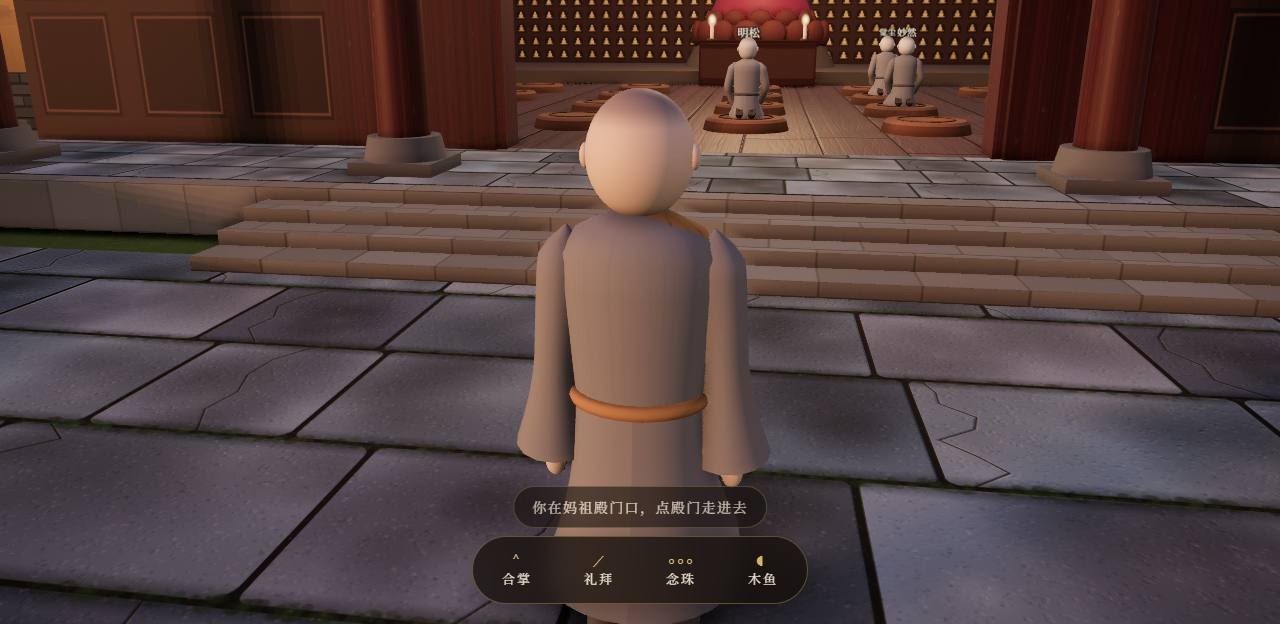
In the hall
Thirty-six metres wide, two tiers, directly north of the main hall. The figure wears a phoenix crown with strings of beads and holds a jade ruyi in both hands.
There is a low rail in front of the altar and a single row of cushions. The light comes from the east in the morning and the west after noon.
Who is this
Mazu was a woman named Lin Mo, born in the tenth century on Meizhou Island in Fujian. Sailors credited her with saving them, and emperors kept promoting her — from lady to consort to empress of heaven.
She is the patron of the sea: fishermen, sailors, and anyone whose family travels by water. Her temples cluster along the southeast coast, in Taiwan, and across Southeast Asia.
In a real temple
A Mazu hall inside a Buddhist compound is unusual; most Mazu temples are folk-religion foundations. The ancestral temple on Meizhou Island, the Tianhou Palace in Tianjin and the one in Quanzhou are the best known.
Offerings tend to be noodles and red rice cakes. Her birthday falls on the twenty-third day of the third lunar month, and the weeks around it are the busiest of the year. Fishing villages still ask for a safe season before the boats go out.
Written in English for readers outside China; the Chinese version is longer. All eight lots of this hall are in the lot library.