Hanlu Temple · A temple you can walk into
Mahavira Hall
The main hall, and the module the whole compound is measured against: forty metres wide, twenty-nine to the ridge.
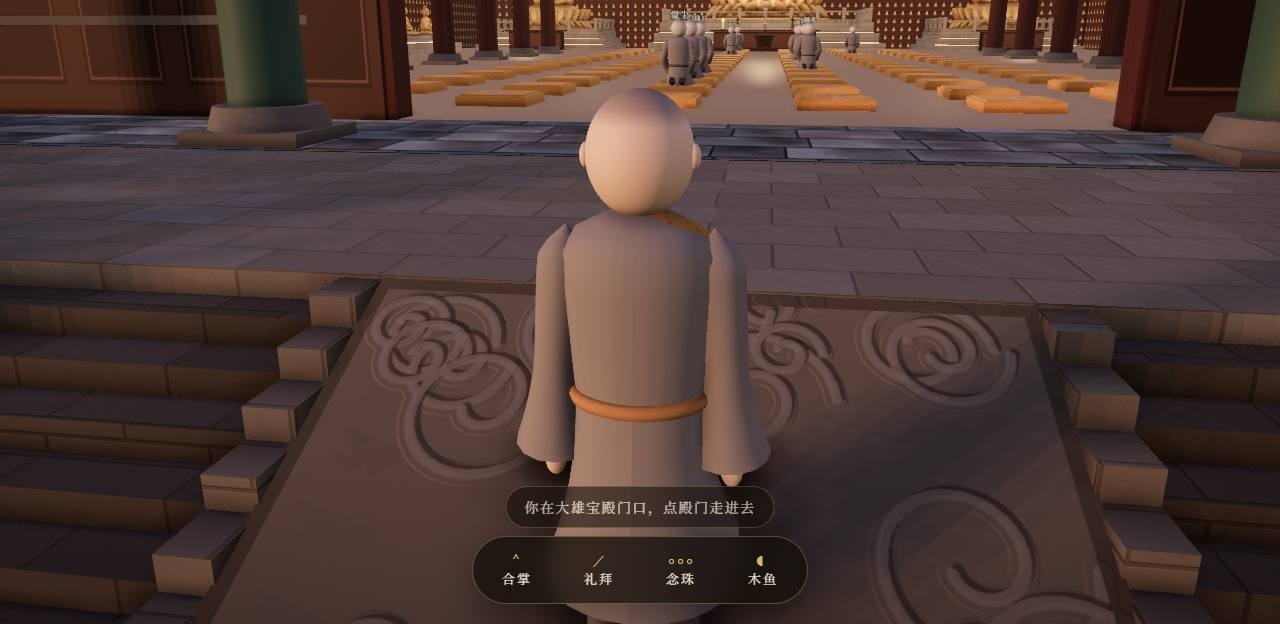
In the hall
Forty by forty-eight metres, three tiers of eaves, a two-metre platform. The central door is nine metres wide; a carved ramp leads up to it, steps on either side.
Inside: fifteen rows of cushions — ninety in all — three golden Buddhas, sutra panels behind them, small figures along the walls, a painted coffered ceiling overhead.
Who is this
"Mahavira" means great hero, and it is an epithet of the Buddha, not a name. The Mahavira Hall is the main hall of a Chinese Buddhist temple, and it almost always holds Sakyamuni.
Some temples install three Buddhas instead: by time (Dipankara, Sakyamuni, Maitreya) or by space (Bhaisajyaguru, Sakyamuni, Amitabha). Eighteen arhats line the walls, and behind the altar there is often a Guanyin standing on an island.
In a real temple
The hall sits on the central axis, the largest and highest building in the compound, usually with a platform, an incense burner and sutra pillars in front. Morning and evening chanting happen here — which is why visitors are often asked to stay outside at those hours.
Etiquette is consistent across regions: take your hat off, do not walk down the centre line, do not step over a cushion. If you arrive during chanting, stand at the back and wait.
Written in English for readers outside China; the Chinese version is longer. All eight lots of this hall are in the lot library.